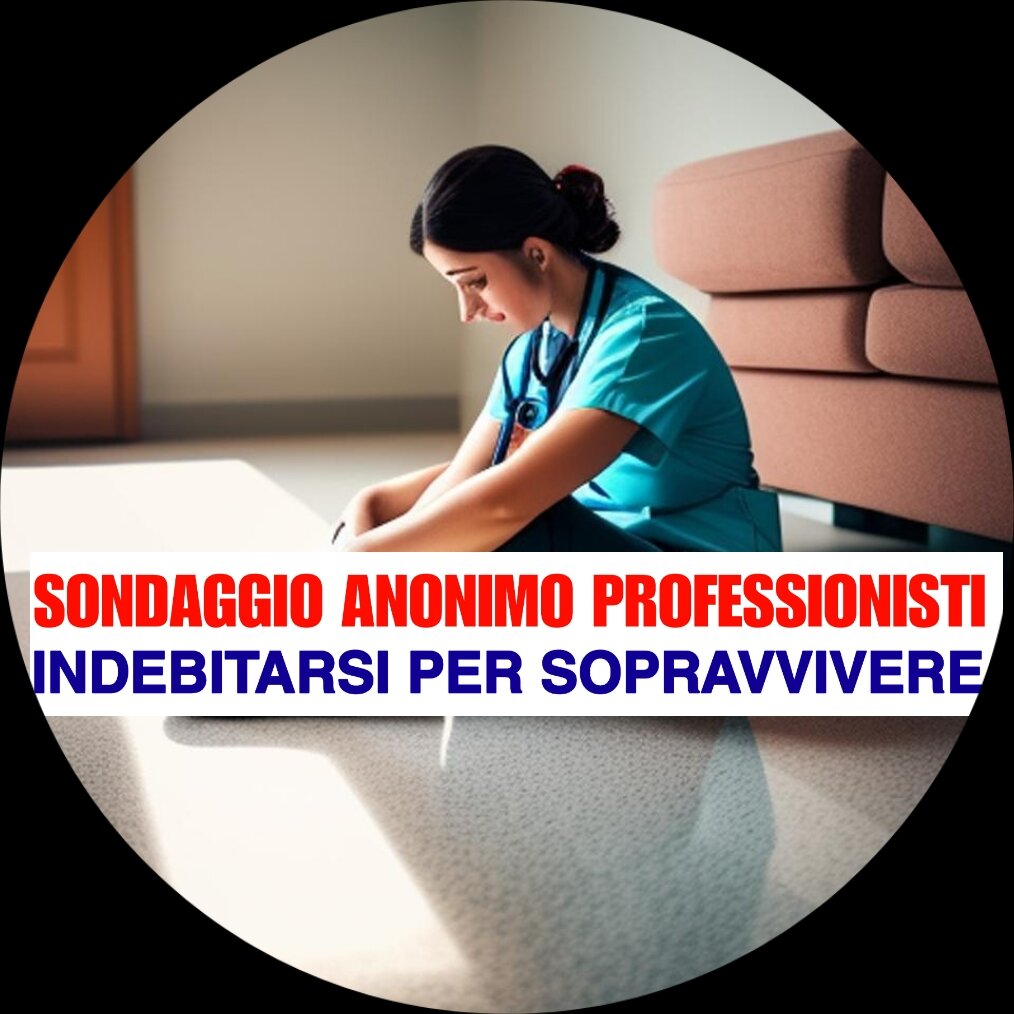
Being a nurse means having dedication, passion, and a high level of training. But in Italy, this profession, like many others in the healthcare field—midwives, physiotherapists, technicians, OSS—is too often associated with low wages, job insecurity, and constant sacrifices. Today, many of us live on the edge of absolute poverty. We work to survive, not to live. For the same pay, the job market offers less risky, less stressful jobs with far fewer responsibilities. The average salary of a nurse in Italy is around 1,500 euros net per month. Added to this are job insecurity, unbearable workloads, and the impossibility, in many regions, of obtaining transfers for decades. Too often, nurses are also denied the opportunity to take on a second job, while expenses keep rising: RAI license fee, OPI dues, car tax, inheritance taxes, skyrocketing VAT, and much more. All this is leading a growing portion of healthcare professionals to go into debt just to make it to the end of the month. Debt has serious consequences The healthcare crisis we are experiencing is also the result of decades of poor political choices and ineffective management of public healthcare. Nurses, like other health professionals, play a fundamental role in society. Yet, despite this, they do not receive the economic and social recognition they deserve. A country that is losing its professionals According to the RN4CAST study, 36% of Italian nurses say they want to leave the country. The main reason? The lack of economic and job prospects. One of the internal surveys by La Pagina di Nursing Up, which reached almost the same numbers as RN4CAST, shows an even clearer figure: 80% of nurses would stay in Italy if only they were guaranteed an adequate salary and a healthy work environment. Salaries stuck in the past, workloads grown out of all proportion Consequences for everyone: staff and patients And the effects are visible: fewer nurses mean more infections, more complications, more avoidable deaths, more costs for the system. More nurses, on the other hand, means fewer pressure ulcers, fewer antibiotics, less suffering, fewer deaths. It's time to act Healthcare professionals are not a cost: they are an investment. La Pagina di Nursing Up
Many colleagues struggle to pay bills, rent, or car payments. Vacations or simple recreational activities become an unattainable luxury. This financial stress inevitably also affects mental health, with an increase in cases of anxiety, depression, and burnout.
Italy has always been a benchmark in the healthcare field. But today, this excellence is collapsing. In the last 40 years, short-sighted policies have generated a structural crisis that is pushing thousands of nurses to seek work abroad.
The salaries of Italian nurses are stuck in the 1990s: when an average salary was about two million lire, compared to a national average of 1,200,000. To this economic stagnation is added the increase in workloads, staff shortages, and the psychological pressure exerted by managers often far removed from operational reality.
The exodus of nurses is already bringing the national health system to its knees. The shortage of staff makes it increasingly difficult to guarantee quality care. But it is not just a healthcare problem: it is also an economic problem. Every nurse who leaves is a resource that Italy loses.
The situation is now unsustainable. Urgent action is needed to improve the economic and working conditions of Italian nurses. The funds are there, but they always seem to end up elsewhere.
It's time for politics to acknowledge this.
Vincenzo Parisi